
BIODIVERSITY · AI
Karibou Project
Automatically sorting camera trap images to keep only those where an animal is present.
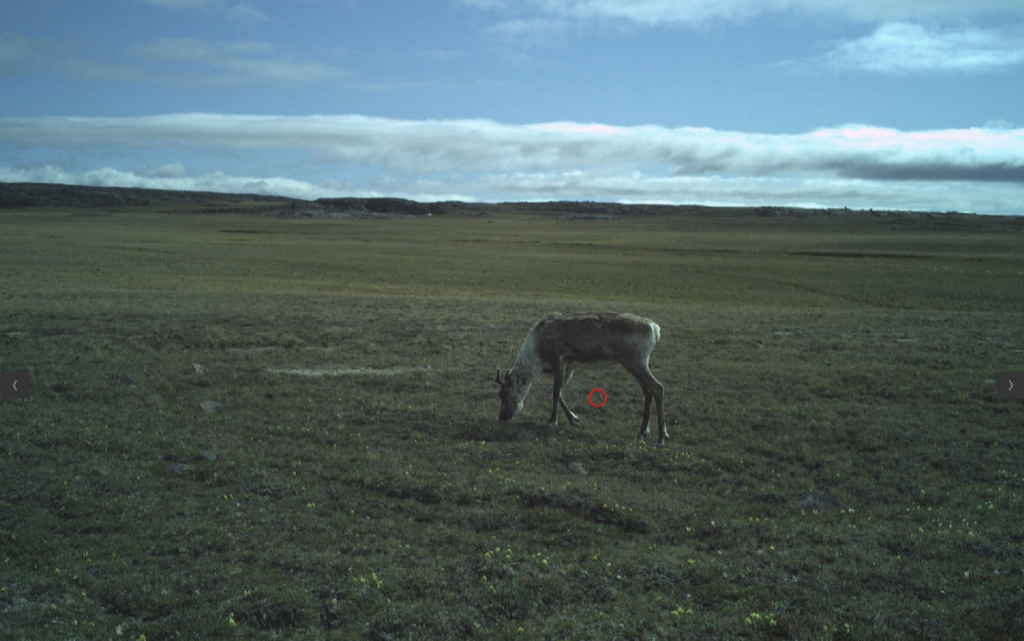
THE CHALLENGE
Hundreds of thousands of images, very few animals
Installed in the tundra, camera traps are triggered continuously. Over a season, they produce hundreds of thousands of images, the vast majority of which contain no animals at all. Sorting them by hand takes weeks of work.
The Karibou project has two objectives:
- automatically discard a large share of the images with no animals;
- keep all the others for a human eye to examine.
OUR APPROACH
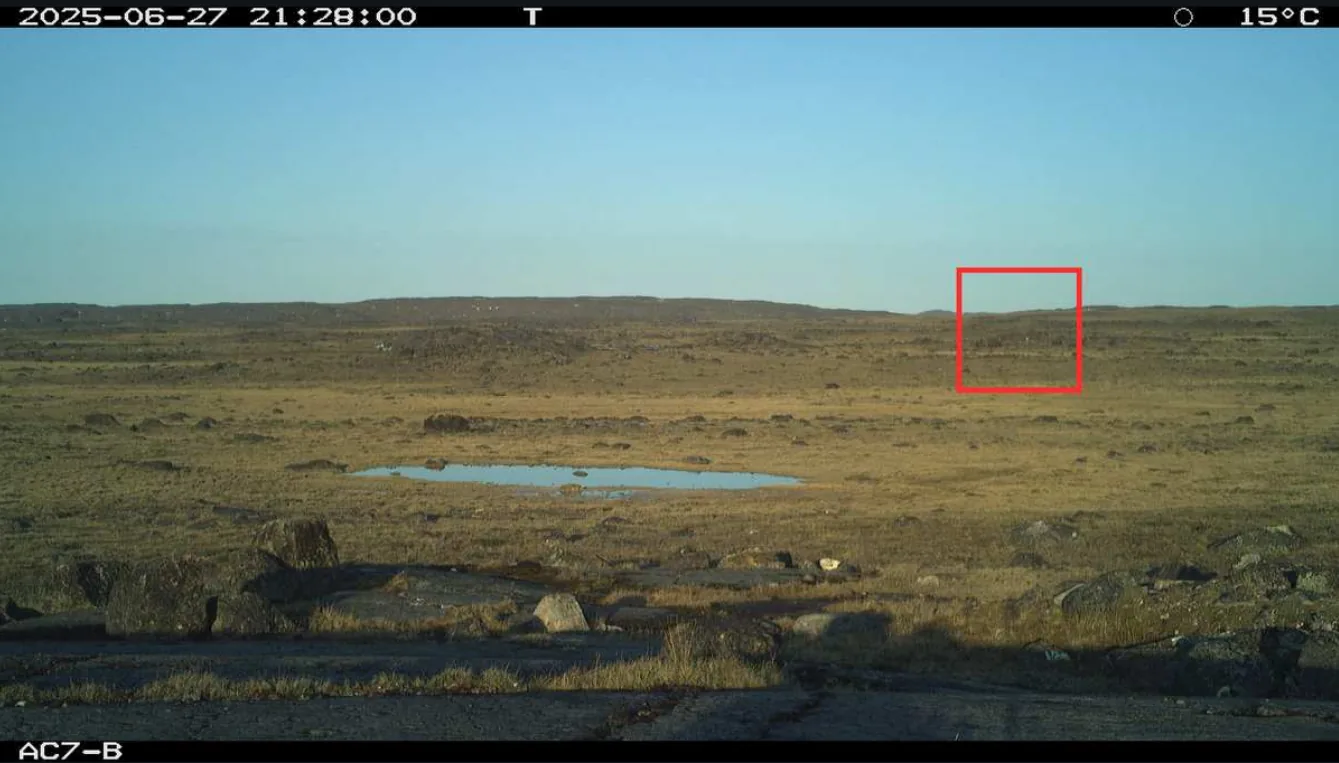
We see the animal because it moves
In these vast open landscapes, a caribou or a goose often measures only a few pixels: far too small for standard detection systems. The Karibou project therefore uses movement, analysing each image together with the previous and the next one. Discover our approach to AI applied to the environment.
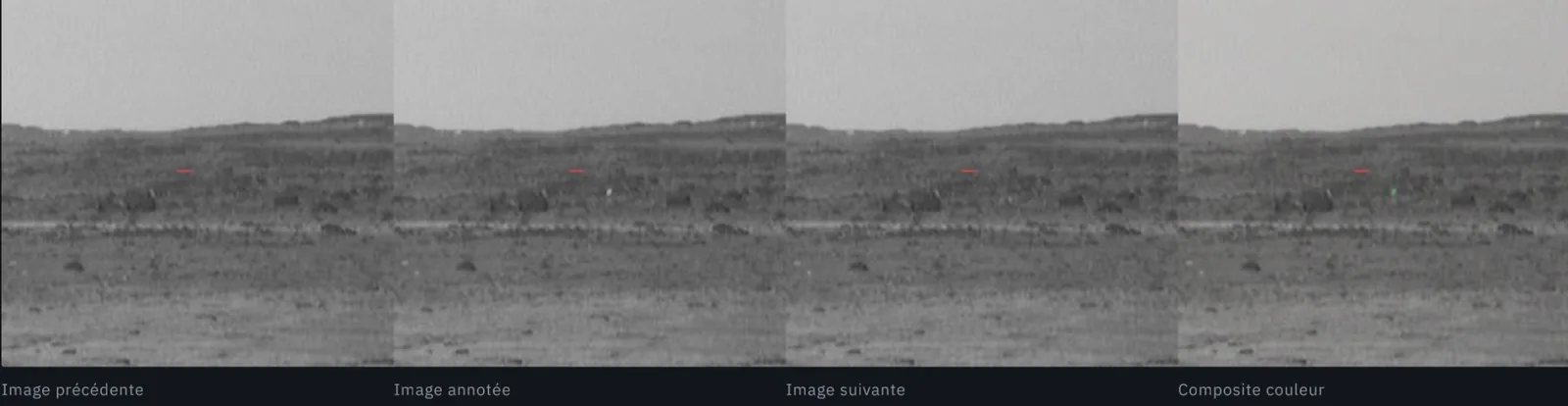
Time window
Each image is compared with its immediate neighbours to bring out whatever is moving.
Events
A sequence of consecutive images forms an “event”, the unit that the model keeps or discards.
Assisted sorting
The model does not replace the expert: it spares them from examining empty images.
THE DATA
Eleven memory cards, seven sites, 318 events
105,320
images collected
7
monitoring sites
318
annotated events
2,486
annotated images
The annotated events mainly involve geese (142), unidentified birds (60) and caribou (41), but also other mammals, gulls and passing people or vehicles.
93% of annotated images have an almost identical neighbour in the same burst. To avoid an overly optimistic evaluation, the model is therefore never validated on a random sample of images, but always on an entire site held out.
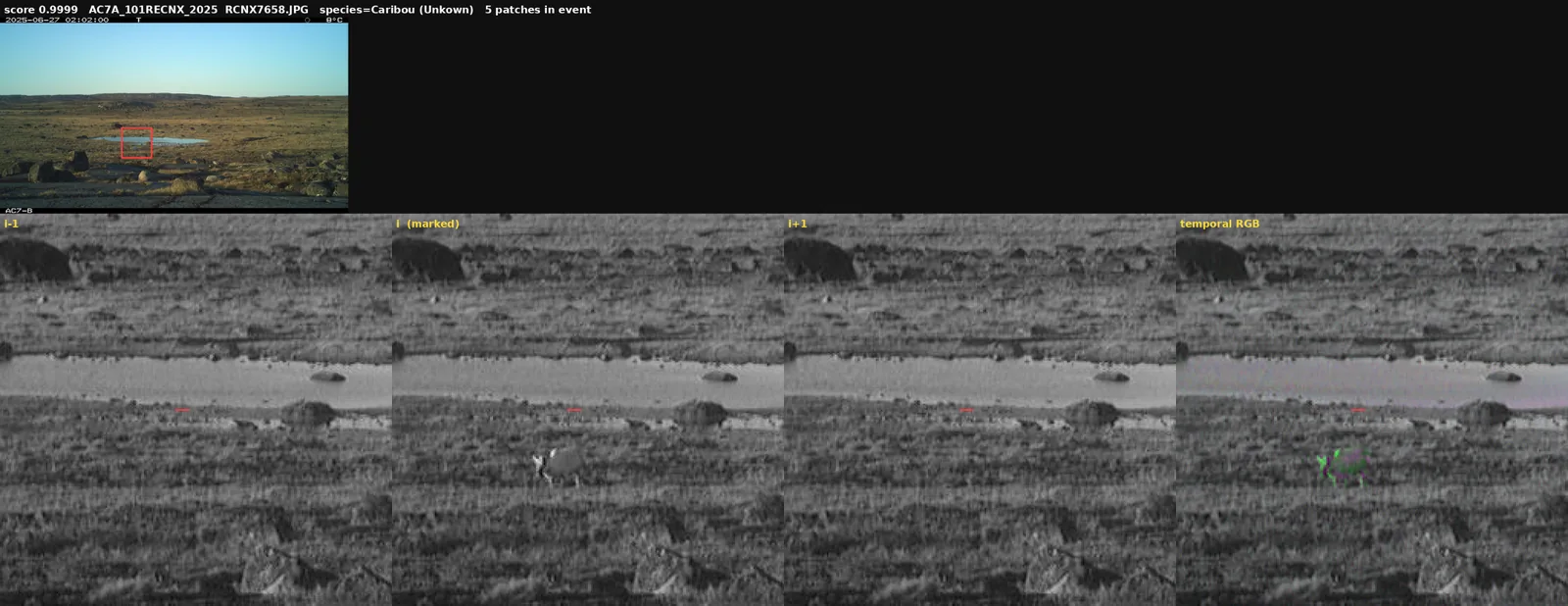
THE DIFFICULTIES
Imperfect annotations
- The position of annotations is offset depending on the camera.
- One annotation may correspond to one or several animals.
- Some images are flagged as containing an animal, but without coordinates.
THE METRIC
Never miss an animal
We measure the proportion of empty images discarded while keeping the annotated events:
- at 100% : the model discards no valid event;
- at 99% : we allow ourselves to miss 1% of valid events.
A wildlife monitoring project?
Let’s talk about your image detection and analysis needs.